About the Author
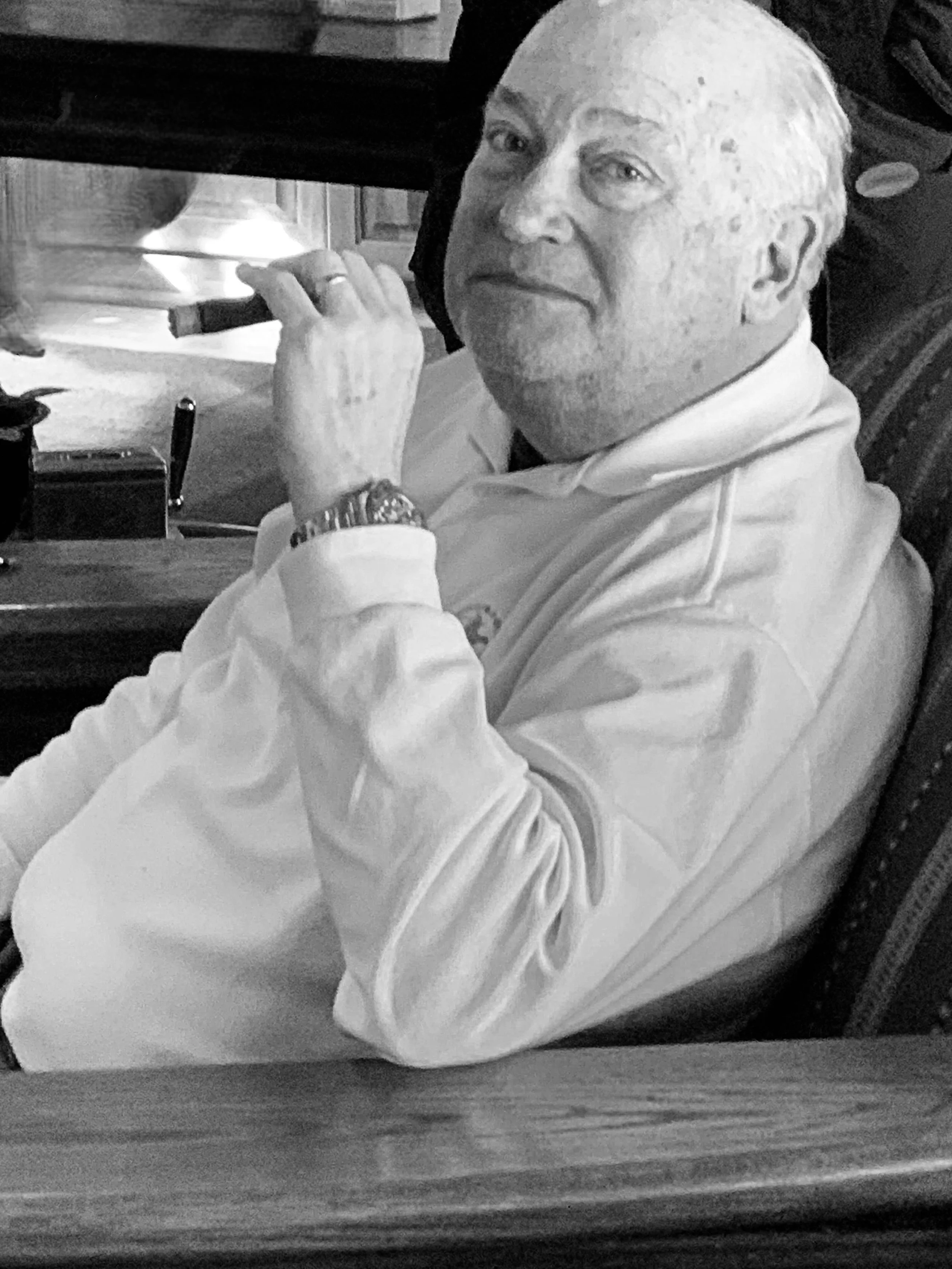
Manning J. (Jim) O’Connor is a trial lawyer with more than forty years of experience in Pennsylvania’s state and federal courts—and a fourth-generation member of a family long rooted in the bench and bar. He has spent his career handling high-stakes employment and commercial litigation, complex corporate disputes, and cases where the consequences extend well beyond the courtroom.
Jim is known for his strategic judgment and his refusal to confuse theory with experience. His counsel is shaped by decades of real trials with real outcomes. In addition, for 20 years Jim served as an Adjunct Professor of Law at Duquesne University, where he taught the practical aspects of litigation, preparation and trial.
A Roman Catholic by formation, practice and temperament, Jim is drawn to the ritual, tradition and places of continuity- whether in the law, faith or daily life. He strives to be a devoted husband, father, grandfather, and friend, and he openly credits his wonderful wife as his steady center and greatest influence.
Though this book marks a turn toward fiction, it is less of a legal thriller than a literary novel. Jim’s favorite authors include W.B. Yeats, Oscar Wilde, James Joyce, and local authors Samuel Hazo and Ken Gormley. His musical tastes run from Gershwin to The Who. He is a classically trained woodwindist and a self-taught drummer.
When he is not practicing law, writing, or spending time with his family, Jim can be found at his gun club, hunting, fishing, on a golf course, or alone in his den, always with his favorite cigar. He enjoys traveling, especially to Ireland. In all of his endeavors, Jim values spaces marked by craftsmanship, quiet confidence and tradition. Optimistic, principled and independent, Manning J. O’Connor writes the way he lives: directly, with conviction, and without pretense.
Born and raised in Johnstown, Pa, Jim has been a resident of Pittsburgh for 50 years.
An interview with MANNING J. O’CONNOR
In his debut novel, trial attorney Manning J. O’Connor tells the story of Declan Brady—a star lawyer who loses his family in a single night, disappears into the priesthood, and six years later is sent to save a dying parish hiding secrets of its own. We sat down with the author to talk about grief, grace, music, faith, the Church, and the possibility of redemption.
—
A Separate Satisfaction opens with a successful trial attorney losing everything in a single night, then picks up six years later with that same man wearing the collar of a Catholic priest. Where did the idea for Declan Brady come from?
I am a trial lawyer, so the initial thought was from my experience of how a trial lawyer might behave. I have also suffered grief in my life. I wanted to combine the experiences and emotions with an escape. A missionary priest in Africa seemed like a total escape.
How did your career as a trial lawyer shape Declan—his instincts, the way he reads people, and the way he approaches conflict?
My background helped in hearing, evaluating, and dealing with the issues which confronted Declan upon his return from Africa.
As a trial lawyer, you immediately assess everyone in the situation. As for conflict, a trial lawyer does not always seek confrontation, but he does not fear it.
As a trial lawyer, you spent a career constructing narratives for juries. What did writing a novel teach you about storytelling that practicing law hadn’t?
Preparing a case for trial, as well as the trial itself, involves constructing a story and a theme. A strong beginning and a strong conclusion are crucial. This novel has helped me realize that the bookends are stronger when the middle is very well developed. Hopefully, juries decide cases on the facts and the law (the middle), not the opening statements or closing arguments of the lawyers, which are not evidence.
After spending a career in a profession where words have very practical consequences, what was it like to use language to invent? Did fiction feel freeing, frustrating, or both?
Both. There is a lot going on in this book, so it was very important to remain focused on the twists and turns of the story without allowing the freedom and frustration to cause the story to veer off course.
The book confronts serious subjects—including the clergy abuse crisis—without presenting the Church simply as a villain. How did you approach that balance?
I was very careful about that. I did not think that avoiding the issue would have been credible. I also included abortion, theft, suicide, and child abuse. All serious topics. The intent was for the issues to resolve in a positive way.
Declan is frequently willing to challenge the institution he has chosen to serve. How do you see the relationship between his contrarian nature and his faith?
In my view, a contrarian is prepared to accept or reject the response to his contrary behavior. Courage is necessary to be a genuine contrarian. The book demonstrates that Declan’s faith never wavered, but he challenged what he thought was wrong with how the Church was being administered to the faithful.
You’ve said it was important that the difficult situations in the book could ultimately move toward something positive. Why was that important to you?
I wanted to strongly convey my belief that regardless of the difficulty of the situation, with faith, courage, persistence, and love, the situations can be resolved in a positive way. I wanted the novel to end with satisfaction, although separately.
Redemption is always available from God, regardless of how and when it is sought. Law can provide some closure for earthly disputes, but eternal redemption can only come from one source.
Declan is a priest, but he’s deliberately not an idealized one. Why was it important to make him flawed?
Saintly characters are sometimes boring and not really saintly. I was determined not to make Declan vanilla and boring. Most priests I know are not boring. Declan needed some of his habits and baggage to make him real and able to deal with difficult situations based upon his own experiences, instincts, and intellect.
Noah Weber, the young piano savant at the center of the story, is a memorable character. Where did Noah—and the novel’s focus on music and artistic theft—come from?
I am a recovering musician. I have followed some music theft issues. I was also involved in a case where a rich person stole a very well-known idea from a savant who worked as his handyman.
What does that mean—a “recovering musician”—and what role has music played throughout your life?
I learned to play saxophone at a very young age. I played in school marching bands, orchestras, concert and jazz bands, and pit orchestras. All the while, I played drums and sang in a few rock bands, which provided some income while I was in college. In fact, I met my wife when my band was hired to play for her 16th birthday party. She has been paying the price ever since. I love all kinds of music. My dad was a musician and music teacher, and I was introduced to big band sounds by him. I listen to music frequently. For a few years I played in a pick-up band at an annual lawyers’ convention. I played drums. It was a great experience.
You said a real case involving the theft of an idea eventually helped inspire Jason West and Noah. What happened?
I was not originally involved in the case. My firm represented the savant, and the decision was made to conduct a mock trial where we could present evidence and then observe the mock jury’s deliberations. I was asked, as a natural-born SOB, to cross-examine the thief. He was cocky, rich, and, I believe, evil. I had a great time. He did not.
I was later told confidentially that the thief watched my cross-examination of him on TV in his limo as he was driven home to his mansion. I will never forget that experience, and it created Jason West and Noah.
Without giving too much away, Jason West is capable of being both harmed and causing harm. What interested you about that contradiction?
West is a troubled soul. His fame saved him and hurt him and then saved him again at the end.
Rather than pointing to any single book as an influence, what people, experiences, and traditions helped form the imaginative world from which this novel came?
All of the above. I was an English and history major with a theology minor in college. I was exposed to all types of writing: prose, poetry, plays, historical and religious accounts. I enjoyed them all. I was fortunate enough to be in several classes taught by Samuel Hazo. In addition, I could not get enough of his writing. I met Ken Gormley after law school, and I quickly became a fan of his work. Obviously, practicing law requires a lot of reading. Likewise, my overall experiences as a lawyer, in the courtroom and otherwise, helped to shape my approach to many things, including this novel. My parents, in-laws, wife, family, friends, and my faith provided the glue to hold the other parts together.
My life experiences would fill a multi-volume set.
What surprised you most about writing and revising your first novel?
How tedious, time-consuming, and absolutely necessary the process is.
What does the title A Separate Satisfaction mean to you?
Satisfaction can take many forms. Professional success, recovering from guilt and grief, attraction without sinful behavior. The emotions from those satisfactions are separate.
You already have the idea for a sequel in your head. Without giving away the story, what might bring you back to Declan?
Declan is a lifelong contrarian, so he will have many more experiences ahead where he can practice his well-honed craft.